
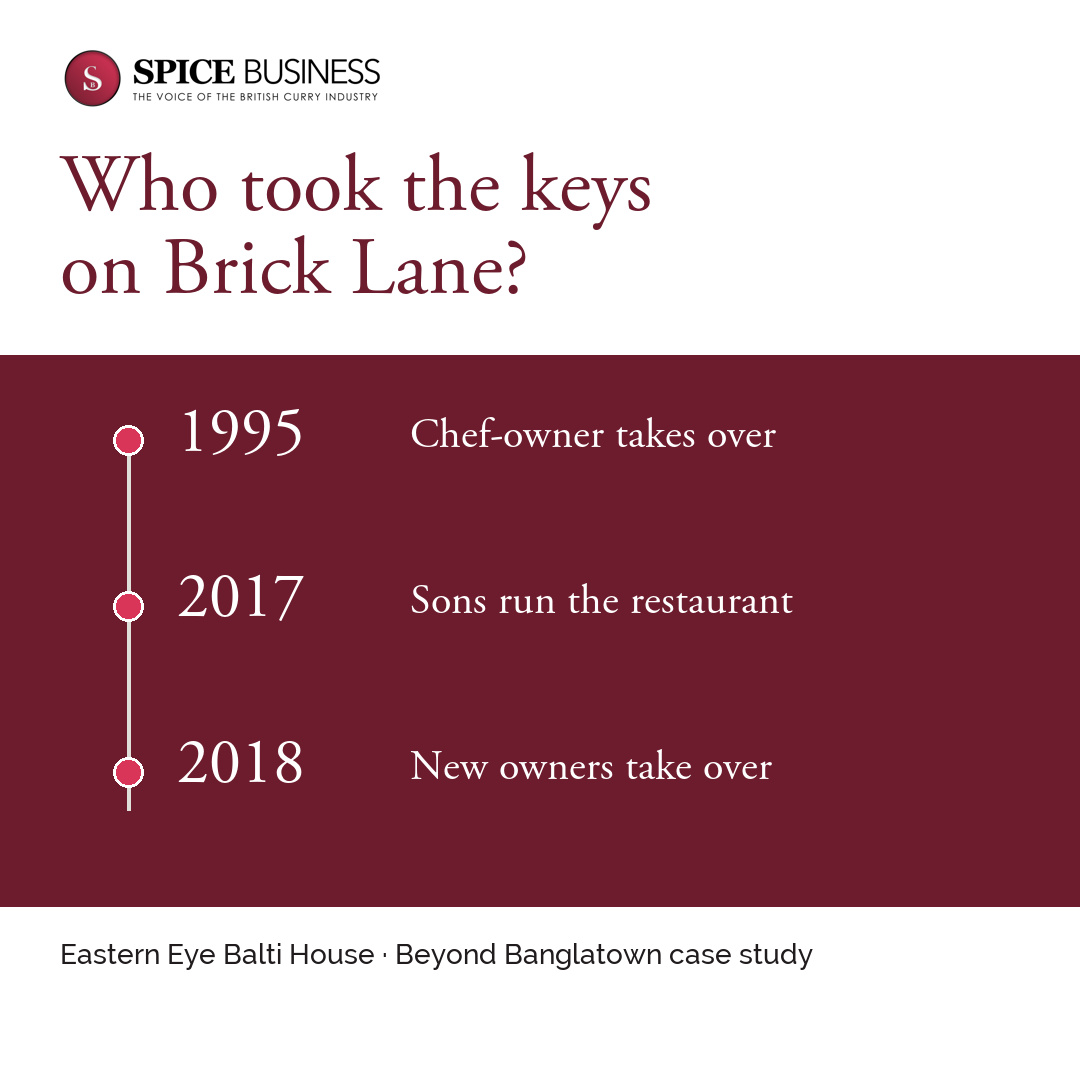
In 1995 the second owner of Eastern Eye Balti House on Brick Lane took on two jobs. He owned the restaurant and worked as its head chef. After he retired in 2017, his sons ran the business for a short period. New owners took over in 2018. That sequence, documented by the Beyond Banglatown project, leaves an important question open. The historical record tells us who ran the business. It gives no grounds for assigning motives to the sons. Beyond Banglatown’s Eastern Eye Balti House case study
For families considering a handover today, those two jobs deserve separate conversations. A successor may want to develop menus and train a kitchen team. Another may want responsibility for the business while an experienced chef runs service. Either arrangement needs enough income to pay the people doing the work and enough authority to let them do it.
The apparent financial reward can change once the founder’s hours are visible. In an illustrative restaurant, £64,000 remains after ordinary annual operating costs but before paying the founder, replacing their work, servicing finance or investing. A successor’s fully loaded employment cost of £42,000 and £12,000 of additional cover would leave £10,000. An annual equipment reserve of £15,000 would already put the plan £5,000 short, before finance and tax. Different restaurants will produce different answers. The useful figure is what remains after pricing the job the family member is being asked to do.
Try the authority as well as the hours
A short operating trial can reveal what an ownership proposal leaves implicit. Give the prospective successor responsibility for a run of midweek services, including purchasing and the power to resolve guest problems within an agreed limit. Before the trial, ask which decisions the founder expects to retain. Afterwards, ask the team who they actually turned to.
If the new manager carries the phone all week but the founder still settles every supplier dispute, the role has acquired responsibility faster than authority. That is a problem the family can fix before discussing a sale or transfer. It can also discover that continuing family ownership alongside a professional operator is the arrangement everyone prefers. Both conclusions require an honest account of the work, a credible wage and the freedom to decline.