
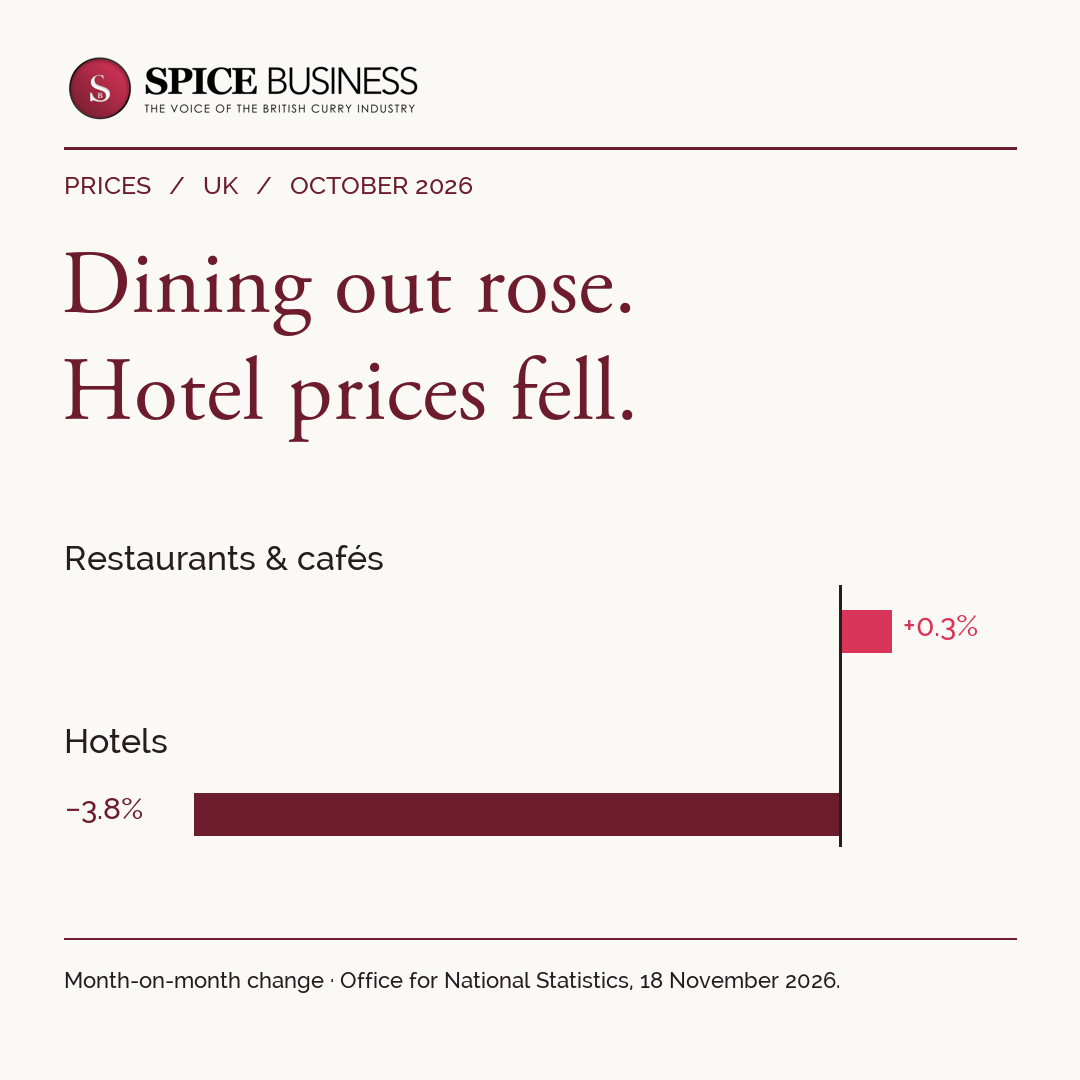
UK restaurant and café prices rose 0.3% between September and October. Over the same month hotel prices fell 3.8%. Combine the two and the official restaurants and hotels category shows a 0.4% fall. An owner reading the combined figure over breakfast could be looking at precisely the opposite movement to the price of eating out. ONS, October consumer price inflation
There is a genuine slowdown behind the numbers. In October last year restaurant and café prices rose 0.6% on the month, double this October’s rise. National consumer indices measure what households pay. A kitchen buying a case of lamb or agreeing a new electricity tariff has a different set of numbers to reconcile. The ONS release gives no separate rate for a curry house.
## The bill that never changed
Consider a kitchen where the supplier’s case price stays at £80 but the usable meat falls from 8kg to 7.5kg. The cost of a 150g raw portion goes from £1.50 to £1.60 without a penny moving on the invoice total. At 400 portions a month that is £40 on one ingredient in one dish. This is an illustration; the starting point for a real review is the restaurant’s specification and its delivered yield.
A second quiet change can happen at the till. A menu board may still say £18 while an increasing share of guests buy that dish on a weekday offer. The number worth following is the realised selling price after discounts alongside the actual cost per portion. Compare the same portion, channel and service. Otherwise a switch from dine-in to delivery can masquerade as an ingredient problem.
October’s figures give an owner a good reason to question the headline before changing a menu. One supplier delivery and a month of till lines can answer the question the national index leaves open: which of the restaurant’s dishes now earns less on each sale?