
The purchaser asks for a price for forty lunches every Wednesday. The restaurant works out a menu, finds space for a packing line and books a delivery. Then the first order comes through for twenty-four. The van still makes one trip and someone still has to get the labels on before reception closes its delivery slot.
This is an illustration, but the uncertainty behind it is familiar from official working-pattern data. The Office for National Statistics found that 28% of working adults in Great Britain combined working from home and travelling to work in January to March 2025. That survey measures people’s working arrangements. It gives a UK caterer context for asking a buyer about attendance, while leaving the number of people in any particular office on a Wednesday to be established locally. ONS analysis of hybrid working
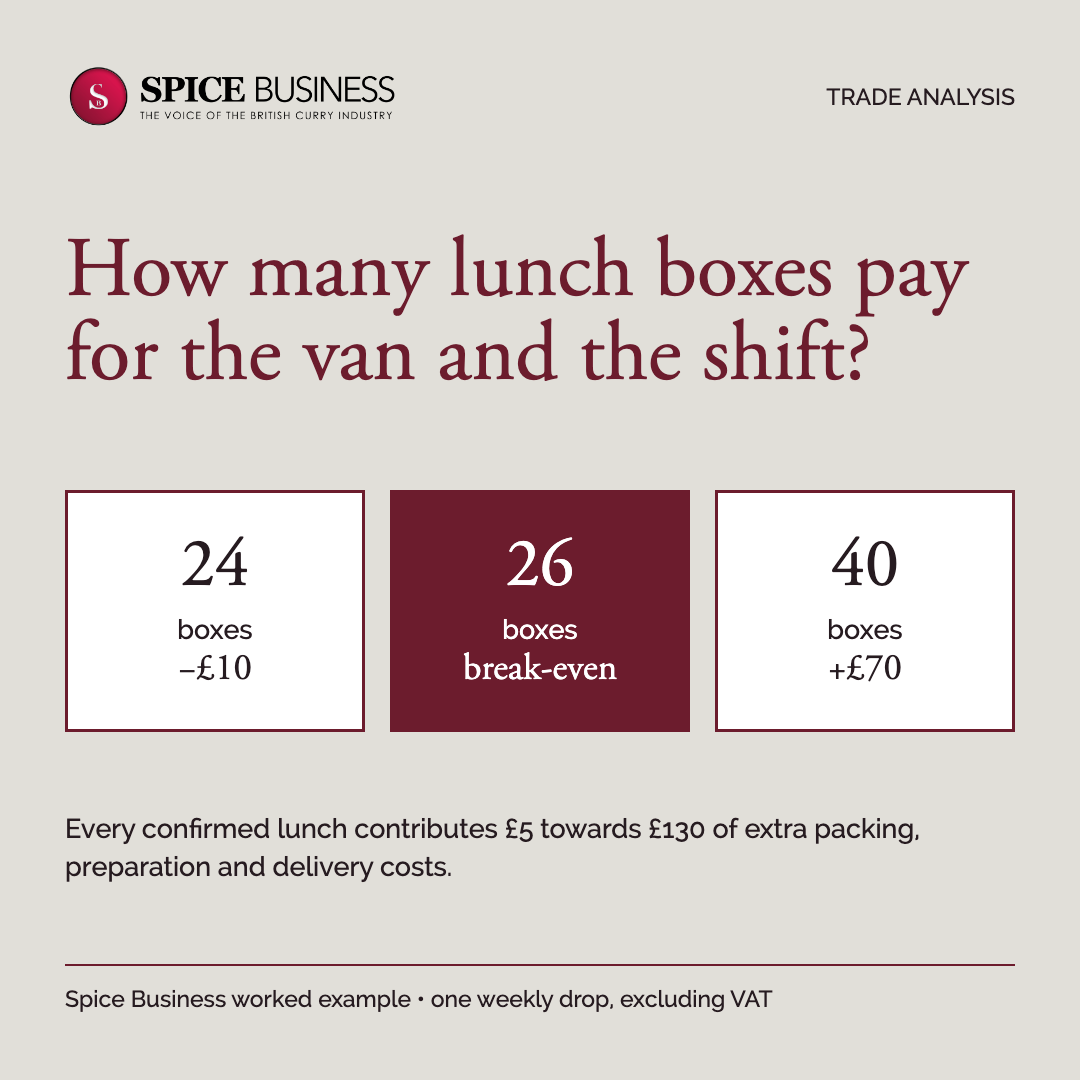
Suppose a restaurant quotes £10.50 per lunch excluding VAT for a chicken pulao or chickpea option. Food, garnish, the container and label cost £5.50. Each confirmed box then leaves £5 to pay for £85 of additional labour and a £45 delivery run. Forty boxes produce £70 after those run costs. Twenty-four boxes produce a £10 shortfall. The first twenty-six simply pay for the run.
A buyer wanting flexibility and a restaurant wanting predictable volume can still do business. At twenty-four boxes, £13 per lunch would leave £50 towards overheads and profit in this example. At the original price it takes thirty-six boxes to leave the same sum. A lower unit price attached to a guaranteed minimum gives the purchaser a way to choose. A separate fixed drop charge is another way to show where the cost sits.
One paid pilot can answer questions a tender form cannot. Time the labelling, check how long the driver waits at reception and ask who signs for the quantity. If the buyer wants deliveries split over three floors, include the time in the next quote. If every drop requires the full run cost before payment, four weekly deliveries of forty boxes require £1,400 of illustrative spending before the first invoice clears. A standing order earns its place alongside the restaurant’s lunch trade when the headcount, the route and the payment date all work.