
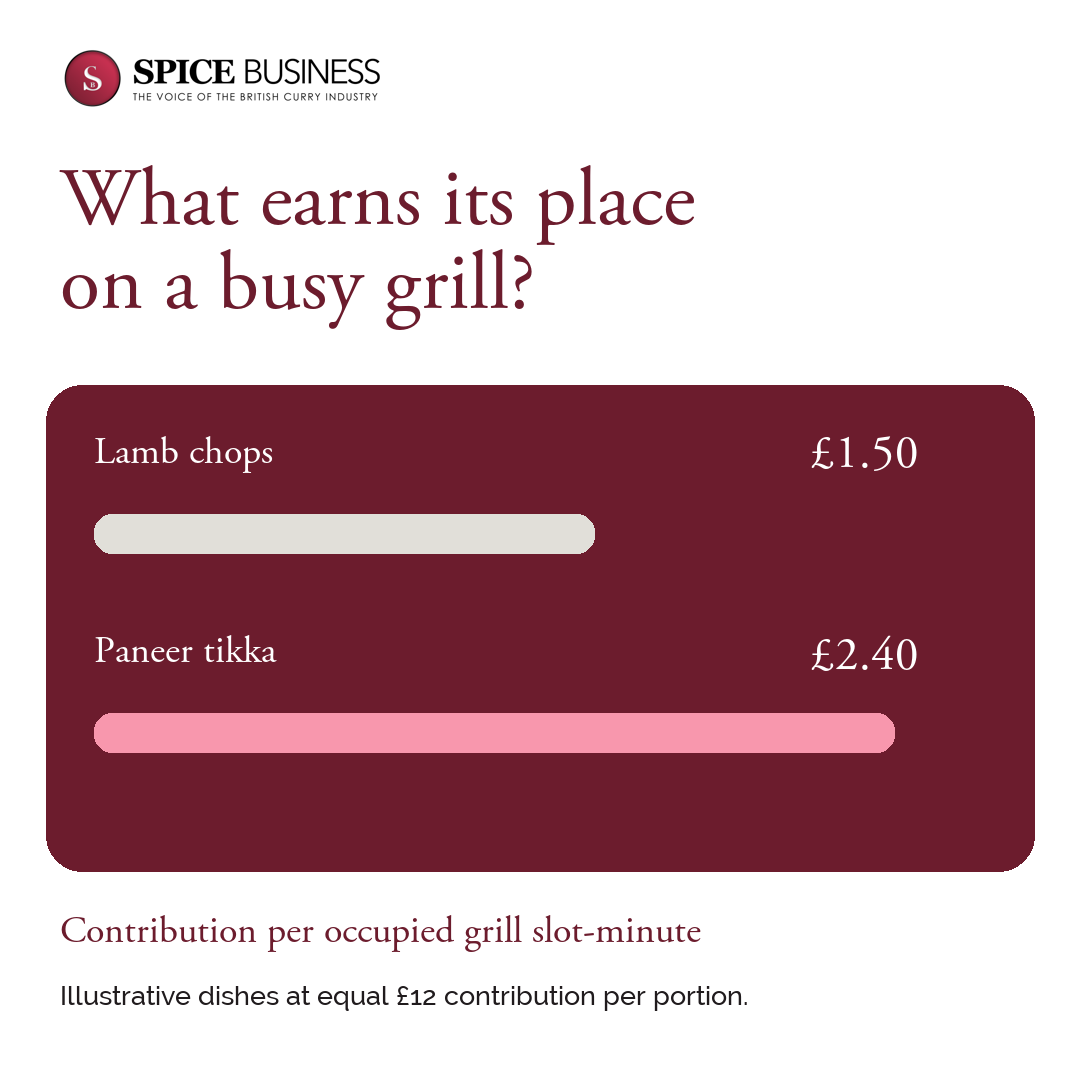
Imagine two tickets waiting on the rail. One is for lamb chops, the other for paneer tikka. Each leaves £12 after direct costs. There is space for only one on the grill. At this point the owner has a decision that a list of bestselling dishes cannot answer.
In a Spice Business worked example, the chops occupy a grill position for eight minutes. The paneer occupies the same space for five. During forty minutes of uninterrupted demand, that position can produce five orders of chops or eight of paneer. The difference in contribution is £36. At six o’clock, when the grill has space to spare, there might be no such difference to capture.
The calculation draws on limiting-factor analysis. First establish which resource limits what the business can sell, then compare how much each sale contributes for a unit of that resource. A position on the grill is one possibility. If several skewers cook together, count how much space each portion actually takes. If a dish sits ready at the pass while a chef finishes the breads, the owner has reason to look elsewhere for the constraint. ACCA’s explanation of limiting-factor analysis
## What else did the table order?
A family may choose the restaurant specifically for its chops. Suppose losing that order also costs the business £8 of contribution from sides and drinks the family would otherwise buy. The chops now bring in £20 for eight scarce minutes, or £2.50 a minute against £2.40 for paneer. The better choice turns on the £8. The till can show what else was on the bill. Establishing whether those purchases depended on the chops takes observation and a conversation with the people who took the booking.
An owner considering a permanent menu change can begin with one busy sitting. Offer guests an appealing dish from a quieter station when the grill queue builds. Compare the whole service with similar nights: contribution, refused orders, ticket waits and the size of the average bill. If the queue simply moves from the grill to the bread station, a successful dish promotion may have bought the kitchen very little.